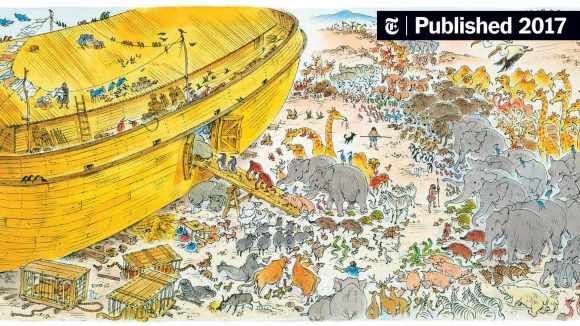
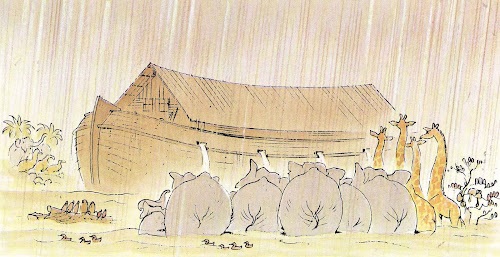
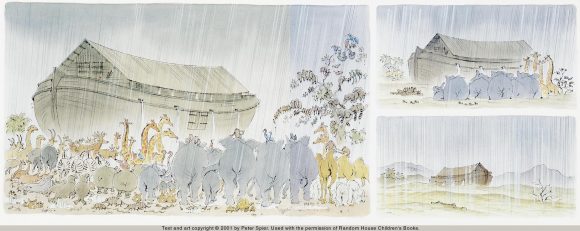
Noah’s Ark, the flood account in Genesis 6-8, is arguably the most well known narrative in the Bible. What does this story still have to say to us today about our faith?
At the end of Genesis, Jacob, the one who grasped for blessing his whole life, finally rests in the lovingkindness and blessing of God so that he can rightly offer blessings to others–to his sons. He invites us to receive the abundance of God’s blessing in our own life and to freely offer it to others.
Joseph is elevated to Prime Minister of Egypt and implements a massive agriculture production and storage endeavor during 7 years of abundance in order to save Egypt, and his own family, when 7 years of famine struck the world. What does God say about work in Genesis? How does Joseph’s work fit into God’s design? And how can we fulfill God’s purposes for us through our work?
The many rises and falls of Joseph, the 11th and favored son of Jacob, is a compelling narrative of broken family systems, personal tragedy and the hopeless circumstances of slavery and prison. But the writer of Genesis records, The LORD was with Joseph. What difference does God’s “With”-ness make? For Joseph, as with for us, it was the power to not only endure the darkness of the dungeon but also for Jospeh to be transformed into a man of faithfulness despite of all of his suffering and loss.
The story of Jacob’s life is the longest of the patriarch’s of Abraham, Isaac and Jacob. Yet Jacob’s life is filled with downs and ups, but more downs. He is a deceiver and schemer, he lies and steals, and he deals with consequences. He wrestles with everyone for what he wants–with his brother for supremacy, with his uncle for his wife and his wages, with his father for love and blessing. But mostly he wrestles, even unknowingly, with God–until he actually does wrestle with the Lord. And when he meets the Lord face to face–he realizes God’s “Hesed” – his lovingkindness – has been with him all along.
After stealing The Blessing & Birthright from his brother Esau, Jacob is forced to flee from his family to the land of Haran. On his way, he stops in a “certain place,” and with a stone for his pillow, he falls asleep and has a dream. He dreams of a wide stairway up to the heavens with angels of the Lord ascending and descending. And then the Lord God speaks to Jacob, calling him, and reaffirming the covenant with Abraham will be fulfilled in him–Jacob, the liar and deceiver, the one who is all alone and at the end of his rope. Jacob knew of the God of his fathers, but he needed to encounter him–so do we.
Jacob is the son of Isaac that God has chosen to carry on his plan of salvation in the line of Abraham until the one who would crush the serpents head once and for all. But neither Jacob, nor his plotting mother Rebekah, seem concerned with the Covenant Promises when they make a plan to deceive Isaac and steal the Father Blessing from Esau, Jacob’s brother and the first-born son of Isaac. Isaac does bless Jacob. But to understand what God is doing, we need to understand the blessing that was given to Jacob, the blessing that Jacob desired, and the blessing that Jacob needed and God had already offered him (and us).
Trusting in God to provide, very late in his life, Abraham calls his servant to go to the land of his kinsman to find a wife for his son Isaac. The servant goes, faithfully obeying Abraham and fully trusting the Lord to provide. And at a well, the scene of Ancient Near Eastern betrothal narratives, Rebekah, of the clan of Abraham’s family, appears and demonstrates generous hospitality, willing service and a fearful spirit. She is the chosen too, the one through whom the promises of God will be realized.
Abraham had waited his whole life for a son. At 100 he has Isaac, the son of the promises. But then God calls him to an unthinkable act of obedience – to offer his son as a sacrifice. Abraham obeys, he is willing to offer even his son to the Lord. But the Lord stays his hand, Abraham has passed the “test,” he will withhold nothing from the Lord. He trusts the God who raises the dead, will we?
Abram is 99 years old, without a son, and it has been years since the Lord spoke to him. But God Almighty shows up to reaffirm his Covenant–renaming Abraham: father of a multitude, i.e. the one through whom God’s plan of salvation would extend to the world. But in reaffirming his Covenant he also calls Abraham to a new Covenant Sign – Circumcision: to mark the very instrument of procreation. Abraham his being asked to trust God, to entrust his very body and life to God, to walk before God in every way.
Sarai and Abram are very old and have no children, but God promised Abram a son. So Sarai suggests Hagar, her servant, might be the one to give birth to son; after all, it was normal to do this in the Ancient Near eastern society. But this was not God’s plan nor his purposes for marriage–they did not trust God and they sinned against Hagar. When Hagar conceives, Sarai despises her; mistreats her and Hagar flees. A foreign, slave woman in the Ancient world was vulnerable and hopeless–but God meets her–he sees her and hears her cries–just as he does for each of us in our desperation and need.
God’s Covenant with Abram (Abraham) is central to God’s redemptive plans in the Bible and history. God chooses a person, whom he will bless and through whom God’s blessing of salvation will reach all peoples. God calls Abram to leave his father’s house and homeland. Abram leaves. But the promises of God seem unfulfilled. Yet God assures him–codifying his promises in a Covenant Ceremony–where God commits to bearing the curse for breaking the Covenant should either of them fall short. Even in Genesis, the gospel of grace in Jesus Christ is being revealed. And like Abram, we are called to Leave all and Follow God where he will lead–to respond by faith to his promises of love and salvation.
After the flood and God’s renewal of creation in his covenant with Noah, humanity again fell away, rejecting God and seeking to build their own name apart from God. In the building of the Tower of Babel, human hubris climaxes and God’s judgment is brought – the scattering of languages and humanity. But even in justice, God is merciful and accomplishes his greater purposes to spread his presence throughout the world.
After the flood, God establishes his Covenant with Noah, his descendants, and all living creatures–never again will God cut off all life. God is re-creating the earth, calling Noah and all humanity to be fruitful and fill the earth anew. The God of the Bible is about restoration and relationship–he is committed to us, who are made in his image. In spite of our sin and rejection of him, he extends grace and generosity and blessing.
Noah’s Ark, the flood account in Genesis 6-8, is arguably the most well known narrative in the Bible. What does this story still have to say to us today about our faith?
East of Eden, Adam and Eve begin a family, first Cain is born, then Abel. In the course of team they grow, enter vocations and bring their offerings to the Lord God. But Cain’s offering is not accepted as Abel’s. Why? Who was Cain actually worshipping and serving, himself or God? God confronts Cain’s displeasure warning him to repent and turn from the sin crouching at his door, but he does not, and he murders Abel his brother. But God raises up another son for Eve–Seth, who is the seed of God’s promise. Seth is the line of those who begin to call on the name of the Lord. Who admit their weakness and see their need of God. But Cain’s progeny is Lamech a man of power, violence and revenge. Who’s way will we walk in – those who assert ourselves and ignore God or those who admit their weakness and worship God?