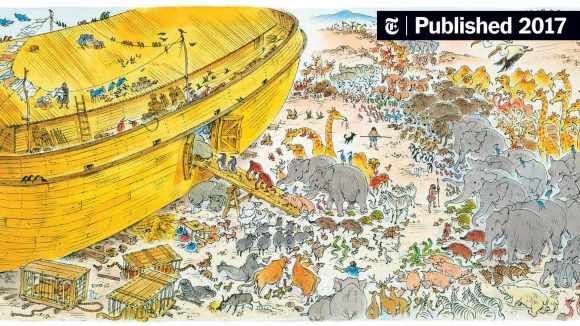
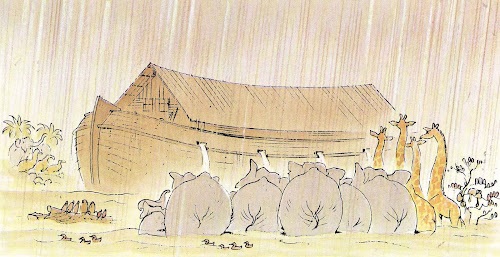
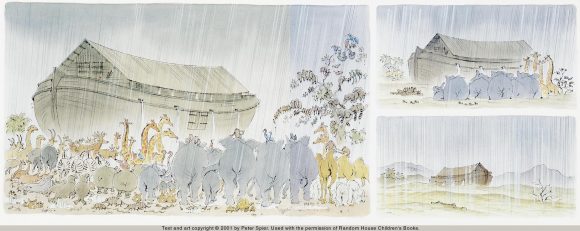
Noah’s Ark, the flood account in Genesis 6-8, is arguably the most well known narrative in the Bible. What does this story still have to say to us today about our faith?
Naaman, the Commander of the Army of Syria is the ultimate insider in his own country. But in Israel he is the ultimate outsider – an enemy who has leprosy. But he comes seeking the healing of the God of Israel’s prophet Elisha. What must he do to elicit the favor of this God? Nothing? Just go and wash in the Jordan–a symbolic act of humility and faith that anyone could have done, great or small, even a little girl–like the one who told him about Elisha. The God of Israel offers his generous healing by grace and he wants to heal completely–as Naaman finds out.
The sum of Ahab’s life is “he did evil in the sight of the Lord.” He worshipped the Baal, the Canaanite god, and rejected Yahweh, the Covenant God of Israel, because he wanted the security and prosperity and did not trust God to provide. Similarly, we are drawn to trust things other than God for our security, identity and happiness. These idols of the heart are the functional saviors that occupy our hearts loves and trusts. But God invites us to trust him and the love and mercy he offers us in Jesus Christ.
Solomon, the greatest of Israel’s Kings is also the wisest man in the world. But David, despite his many failings, is called a man after God’s own heart. It is not influence, reputation, brilliance or success in life that matters most, it is a heart for God and finishing well.
Does life matter? Do I matter? The birth of Christ on Christmas invites us to look in the manger and to see the God who loves us and made us and who says to us–yes.
Nearly every character in the Old Testament had flaws and failures–except Ruth and Boaz–two of the central characters in the book of Ruth. They demonstrate “hesed” (loyal lovingkindness) to those around them. In Ruth chapter 3 their stories come together in an evening filled with dramatic tension in which both walk in courageous sacrificial loving faithfulness.
Joseph is elevated to Prime Minister of Egypt and implements a massive agriculture production and storage endeavor during 7 years of abundance in order to save Egypt, and his own family, when 7 years of famine struck the world. What does God say about work in Genesis? How does Joseph’s work fit into God’s design? And how can we fulfill God’s purposes for us through our work?
The many rises and falls of Joseph, the 11th and favored son of Jacob, is a compelling narrative of broken family systems, personal tragedy and the hopeless circumstances of slavery and prison. But the writer of Genesis records, The LORD was with Joseph. What difference does God’s “With”-ness make? For Joseph, as with for us, it was the power to not only endure the darkness of the dungeon but also for Jospeh to be transformed into a man of faithfulness despite of all of his suffering and loss.
Jacob is the son of Isaac that God has chosen to carry on his plan of salvation in the line of Abraham until the one who would crush the serpents head once and for all. But neither Jacob, nor his plotting mother Rebekah, seem concerned with the Covenant Promises when they make a plan to deceive Isaac and steal the Father Blessing from Esau, Jacob’s brother and the first-born son of Isaac. Isaac does bless Jacob. But to understand what God is doing, we need to understand the blessing that was given to Jacob, the blessing that Jacob desired, and the blessing that Jacob needed and God had already offered him (and us).
Abraham had waited his whole life for a son. At 100 he has Isaac, the son of the promises. But then God calls him to an unthinkable act of obedience – to offer his son as a sacrifice. Abraham obeys, he is willing to offer even his son to the Lord. But the Lord stays his hand, Abraham has passed the “test,” he will withhold nothing from the Lord. He trusts the God who raises the dead, will we?
Abram is 99 years old, without a son, and it has been years since the Lord spoke to him. But God Almighty shows up to reaffirm his Covenant–renaming Abraham: father of a multitude, i.e. the one through whom God’s plan of salvation would extend to the world. But in reaffirming his Covenant he also calls Abraham to a new Covenant Sign – Circumcision: to mark the very instrument of procreation. Abraham his being asked to trust God, to entrust his very body and life to God, to walk before God in every way.
God’s Covenant with Abram (Abraham) is central to God’s redemptive plans in the Bible and history. God chooses a person, whom he will bless and through whom God’s blessing of salvation will reach all peoples. God calls Abram to leave his father’s house and homeland. Abram leaves. But the promises of God seem unfulfilled. Yet God assures him–codifying his promises in a Covenant Ceremony–where God commits to bearing the curse for breaking the Covenant should either of them fall short. Even in Genesis, the gospel of grace in Jesus Christ is being revealed. And like Abram, we are called to Leave all and Follow God where he will lead–to respond by faith to his promises of love and salvation.
After the flood, God establishes his Covenant with Noah, his descendants, and all living creatures–never again will God cut off all life. God is re-creating the earth, calling Noah and all humanity to be fruitful and fill the earth anew. The God of the Bible is about restoration and relationship–he is committed to us, who are made in his image. In spite of our sin and rejection of him, he extends grace and generosity and blessing.
Noah’s Ark, the flood account in Genesis 6-8, is arguably the most well known narrative in the Bible. What does this story still have to say to us today about our faith?
God created us with bodies, physical human bodies. God’s story for all of history is revealed in our bodies, male and female. We are made in God’s image, but in the union of male and female in the covenant of marriage, there is the possibility of birthing new life–a human being, made in the image of God. In this way we participate in the divine overflow of love and creation in the beginning. We are also erotic creatures, desiring and loving creatures. God our creator designed us this way to point towards him in worship and in anticipation of the eternal union with him that has been the eternal joy of the Trinity. In our bodies, in our sexuality, in our eros, rightly ordered, we are being invited into the divine dance.
Doesn’t God want me to be happy? Why can’t I do what I want? Doesn’t God want me to be happy? What if there’s a deeper happiness, one we are designed for in this life and eternally? What does the creation of human beings with physical bodies tell us about God’s purpose for life. God created us with bodies, God became a body, and he invites us into his plan through our bodies. Your body matters: it is good, it is eternal, it is physical, it is you, and it reveals God’s story for all of creation.